

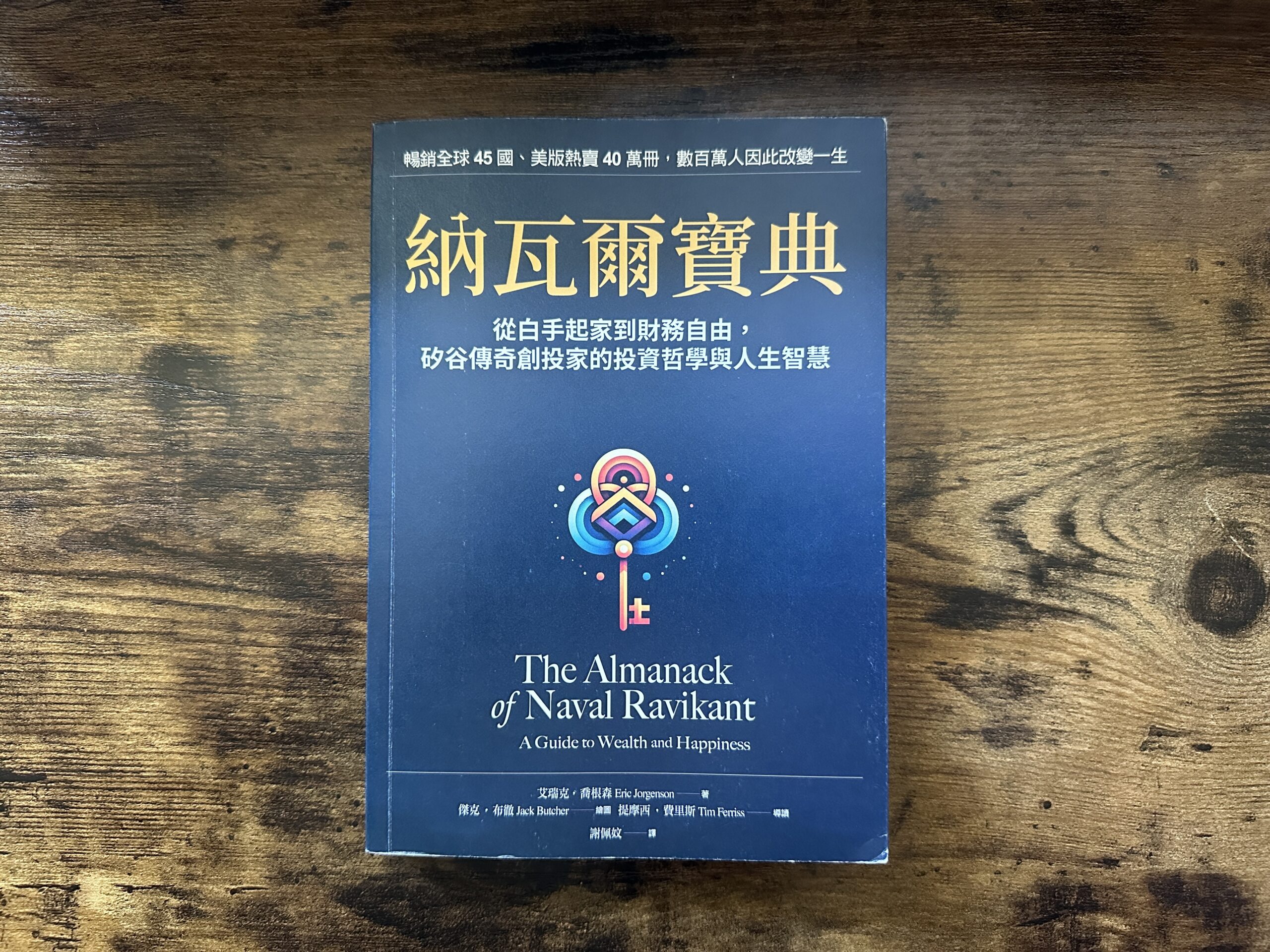
敲碗很久的書終於來了—從前年和某位電粉聊時,就聽到這本書的存在。(也因為他發現張修修的不正常人生)。這本書反覆被各大 Podcast 節目和訪談的來賓提及,可想而知他的重要、必讀性及價值之高。
於是我下定決心:2026 年我要買這本書,反覆閱讀,每年重新看一次。希望對自己的人生有更顯著、長遠與深遠的影響。
Naval 的書寫方式非常淺顯易懂,敘事口吻直白,直戳重點和問題的核心。這本書非常適合喜歡邏輯清晰、思路明確的人。
這篇閱讀筆記將以 Incremental 的方式新增。每當我閱讀一小章節,我會記下該段落的收穫 takeaway 及喜歡的金句。
Get Paid by your Judgement
Demonstrated judgement – credibility around the judgement – is so critical.
- I would love to be paid purely for my judgment, not for any work. I want a robot, capital, or computer to do the work, but I want to be paid for my judgment.
- I think every human should aspire to being knowledgeable about certain things and being paid for our unique knowledge. Then, we can be masters of our own time because we are just being tracked on outputs and not inputs.
- Get paid purely from your judgement, not your Time.
我覺得這是年輕人剛出社會容易犯的錯誤,包含我自己。我們常不小心把目光放得太短淺,只專注在短期內是否『能夠變現』這件事,卻錯失了那些『重要但不緊急』的事。(呼應 The Seven Habits of Highly Effective People – Steven Covey)。舉個例子:去做外送,很快你就能賺到錢,但你付出的是做外送的時間。
再呼應到 The Diary of a CEO – 執行長日記的第一節說的:你應該優先填滿前兩個桶子:知識(Knowledge)和技能 (Skills)。在評估一份工作時,除了他的薪資,你應該仔細思考:這份工作能讓你增加多少知識和技能?
Naval 以巴菲特為例子:說他花了一年時間做一個決策,該決策足以支撐未來一整年。我們卻常浪費時間在各種 busy work & short-term thinking。
Prioritize and Focus
- Value your time at an hourly rate, and ruthlessly spend to save time at that rate. You will never be worth more than you think you’re worth.
- No one is going to value you more than you value yourself. You just have to set a very high personal hourly rate and you have to stick to it.
這段的啟發是:給自己一個很高的時薪。在做任何事情前,先想:這件事所需要投入的時間,值得自己訂給自己的時薪嗎?(假設一小時500美金)如果不值得:那不是相當於付$500美金給一件極其微小的事情?(例如:跑大老遠一個多小時去退貨一個壞掉的物品)